

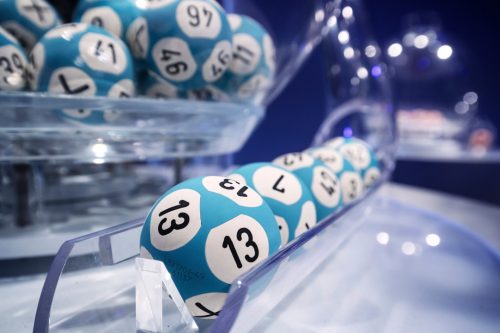
According to a 2025 study led by robo-advisor Yomoni, 79% of French people believe that betting at the lottery carries less risk than investing in the Stock Market. 65% of the French have never invested in the stock market, and have no intent of doing so.
I was astounded when reading the poll, wondering how gambling is preferred to stock investing in a developed country that owes its high standards of living in part to the market economy and its financial system. Yes, French Social Security assists the average Jean to get unemployment, healthcare, retirement benefits. Does that really excuse snobbing the stock market over Euro millions?
In a casino, the longer you stay, the more likely you are to lose. The house always wins. In the stock market, the longer you stay, the more likely you are to win.
In other words, gambling in the casino is in general much riskier than being invested in a professionally-managed world equity fund.
What is Risk?
The average Jean will tell you it is about “losing money.” And they’re right. But since a Loto ticket only costs €2.20, they feel the risk is negligible.
In practice, Risk is the probability of an outcome. At the lottery, you have a 99.9999% certainty of losing 100% of your stake. In the stock market, while there is volatility, the probability of losing 100% of a diversified portfolio (like an MSCI World ETF) over a 30 year long investment horizon is conservatively and historically near zero.
Extreme Probabilities
The human brain struggles to conceptualize extreme probabilities. If somebody tell us that we have a “1 in 10” chance, we get it. But we struggle to visualize how much worse “1 in 19 million” actually is, leading to poor financial risk assessment.
If the numbers don’t register, let’s try with words! Did you know that the longest book ever written is French? The book ‘A la Recherche du Temps Perdu’ (‘in Search of Lost Time’), written by Marcel Proust, holds the Guinness World Record for the longest novel ever written, containing approximately 1,267,000 words. What better than a French masterpiece to reconcile the French with the stock market?
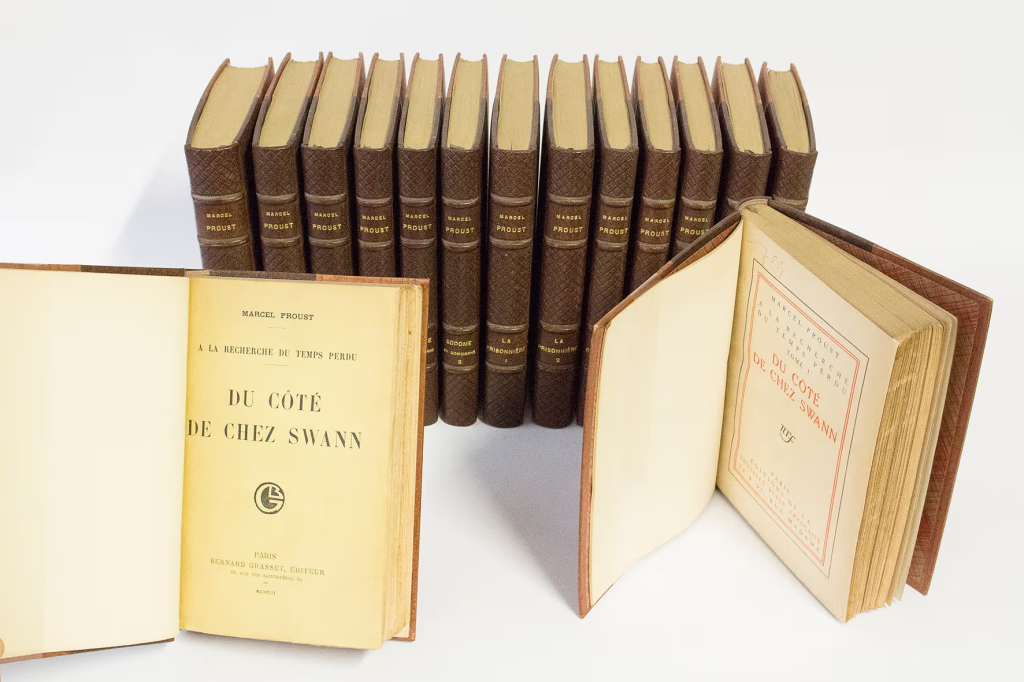
Now, say the book is the lottery game; you get to bet 2 euros on any word of the novel. If you pick the right word, you win the JACKPOT!
Instead – up to you – you can use the novel to play a different game: you get to invest 2 euros on any word, and each word represent an investment in the stock market, in a MSCI World Equity Fund as an example, that we buy and keep invested for 10 years, 20 years, or 30 years.

The Mathematics of Winning
1 Square = 1 Word in a 1,000-Word Chapter.
Don’t Despair, there are more prizes
We kind of knew that we’re not likely to win the jackpot. Don’t despair, here is a list of events much more likely to happen:
- Getting struck by lightning: 1 in 1 million (You are roughly 19 times more likely to be struck by lightning than to win the Loto).
- Being attacked by a shark: 1 in 3.7 million (You are 5 times more likely to be bitten by a shark, even in France).
- Making a profit in the S&P 500 over any 20-year rolling period: >95% Historically almost guaranteed, provided you don’t panic sell, and just buy-and-hold.
How do you compare a small chance of winning a lot with a large chance of winning a little?
Enters ‘Expected Value’
To compare gambling against investing, we must look at Expected Value (EV). The concept of Expected Value strips away the dream and leaves only the math. Take a €5M jackpot:
EV = (Probability of winning × Payout) − Cost
EV = (1 / 19,068,840 × €5,000,000) − €2.20 = –€1.94
This specific €5M payout tier contributes 26 cents to the value of the ticket, but the ticket costs €2.20, so the expected value is -€1.94.
Hang on, other prizes also contribute per their respective probabilities and cash payouts. Sum the respective payouts multiplied by their probabilities, substract the €2.20 ticket cost, et voila, total Loto EV is negative -€0.89. The French are paying for a €2.20 ticket that is actually worth €1.31.
That said, the Loto EV can get positive for big jackpots, say above €25M. But it’s still a bad idea to play, because a positive EV combine with extremely low probabilities only guarantees a profit if you can play an infinite amount of times. In the case of loto, you only have a single lifetime to play (and to read Proust… 15 times over).
The stock market EV
Unlike the set fixed prizes tiers of the loto, the stock market uses continuous probability because it has a near-infinite set of possible returns, using a 7% annualized return rate which is the MSCI World average, and we keep our investment for 10 years.
EV = (€2.20 × (1+7%)^10 − €2.20 = €2.13
So that €2.20 initial capital has an EV of €2.13, meaning a total ending value of €4.33. This shows that an investment in a MSCI Equity World fund could expect to double the invested money if kept invested over the next 10 years. Over a 45-year long career, the €2.20 become €46.20, with the important caveat being that this is based on historical MSCI returns since 1969.
The Cost of Dreaming
By now, we should understand that every lottery ticket we buy destroys roughly €0.89 of real wealth. Every. Single. Time. On average, by mathematical certainty.
Regardless, the gambling business keeps growing in France per various studies. I read that the average active French player at the largest Gambling Operator bets over €60 per month on average.
The Lottery Money Incinerator
Compare the continuous compounding of the MSCI World (7% CAGR) against the negative Expected Value of the French Loto.
The Math: By deploying €12,000 over 10 years…
- Investing generates a mathematical expectation of +€5,308 in profit.
- The Lottery guarantees an expectation of –€4,800 in destroyed wealth.
Those 60 euros per month, invested in the MSCI World over 40 years, would have returned over €125,000, while the lottery habit will probably destroy over €10,000 over 40 years of life, granted we are not considering inflation.
How long will dreamers dream
The lottery operators are seductive. They dangle massive instant payouts advertisements, and herald glossy mottos such as “100% of lottery winners have bet a wager”.
For all the excellent marketing, the lottery is a tax on people hopes, for little entertainment. Meanwhile, the standard buy-and-hold stock market couldn’t be further away from a casino. It is one of the most powerful wealth-creation solution that most French savers have been culturally conditioned to fear.
Perhaps Yomoni will do another poll in the coming years. Perhaps the 61% savers who believe they don’t have enough money to get started will finally realize that many brokers now allow investing from as little as €1 and will start swapping their gambling habits for healthy investing habits.
Of course, investing carries risks. Long-term profit expectations do not prevent short term 50% crashes, and the future stock market’s rate of return could drop… But I’ve taken the bet that investing will retain a positive EV.
Real-time Experiment
I do not provide financial advice, but I do operate with transparency. If you want to see exactly how I attempt to capture this positive Expected Value in real-time, you can track my portfolio and performance here.
If you are French and not ready to invest in global equities, start by reclaiming your lost capital. Cancel your weekly €10 Loto budget. Set up an automatic transfer of that exact amount into your Livret A or LEP. It carries zero risk and instantly stops the mathematical destruction of your wallet.
Source Methodology: Probabilities are calculated using the standard institutional method of rolling monthly periods. Data is based on historical Net Total Returns (NTR) of global equity indices (e.g., MSCI World), a methodology corroborated by multi-decade historical market research from institutions such as Vanguard and the UBS/Credit Suisse Global Investment Returns Yearbook. Past performance does not guarantee future results.
Leave a Reply